



Water softening salt
Hard water causes limescale buildup on taps, in pipes, and in your dishwasher or washing machine. With water softener salt, your water softener regenerates itself, keeping your entire household free of limescale. At Nederlandse Zouthandel, you order high-quality water softener salt from trusted brands such as nedzal®, Regenit, Axal and Broxo in bags of 10 kg, 15 kg or 25 kg, or cost-effectively by pallet.
Discover our range of water softener salt and choose the right granule for your application, from fine to coarse and suitable for both private and professional use.

What is water softener salt?
Water softener salt is pure sodium chloride (NaCl) with a very high degree of purity; usually 99.8% or higher. It is used to regenerate the resin in a water softener. That resin captures calcium and magnesium ions from the tap water (the substances that cause limescale) and is periodically "flushed" with a salt brine. This washes away the limescale particles and your resin is ready to soften water again.
Water softener salt is also known as regeneration salt, water softener salt or water conditioner salt. It is available in three main forms:
- Granules (granulate vacuum salt): fast-dissolving, ideal for modern installations with a fast regeneration cycle.
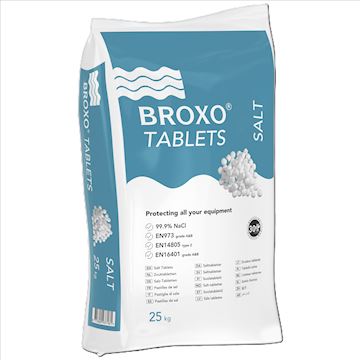
- Tablets (salt tablets): pressed tablets such as nedzal®, Regenit and Axal are suitable for virtually every water softener.
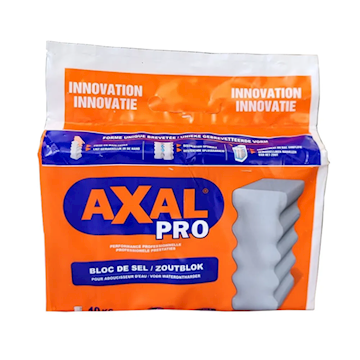
- Salt blocks: large blocks for specific installations, with the advantage of little dust formation and easy filling.
Please note: table salt, road salt and rock salt are not suitable for your water softener. They contain impurities or anti-caking agents that damage the resin.
Why soften water?
In large parts of the Netherlands, tap water is hard to very hard. Softened water delivers directly noticeable benefits:
- No limescale on taps, shower heads, glassware and tiles
- Longer lifespan of washing machine, dishwasher, coffee maker and central heating boiler
- Less detergent and soap needed
- Better for skin and hair after showering
- Lower energy bills - even a thin layer of scale in a boiler significantly increases energy consumption
Which brand of water softener salt should I choose?
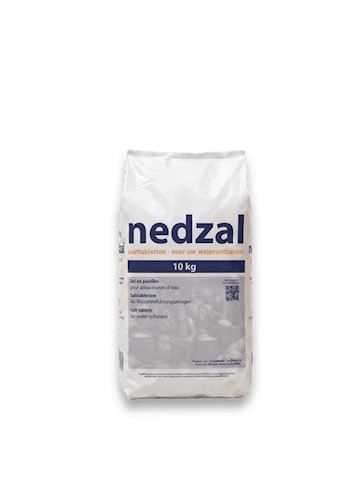
nedzal®
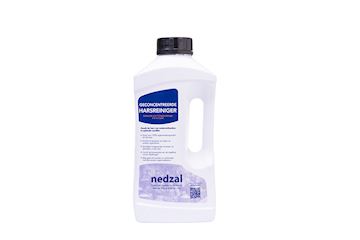
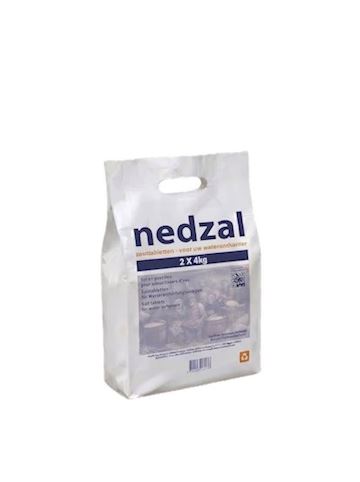
nedzal® is a new player on the market and, in addition to the quality of its product, focuses primarily on more convenient packaging. No struggling with 25 kg bags, but controlled refilling of your water softener with a 10 kg bag. nedzal also has 4 kg salt blocks and resin cleaner in its range.
Regenit
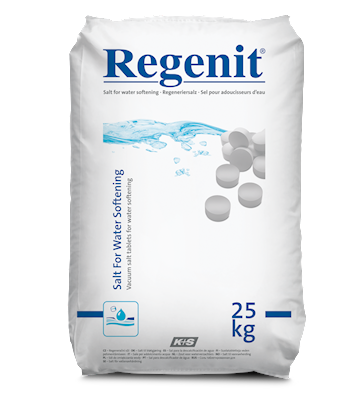
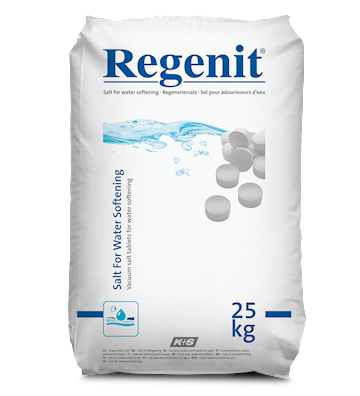
Regenit is the best-known brand of water softener salt in the Netherlands. Regenit tablets are recommended by almost every water softener manufacturer due to their guaranteed purity (99.9%) and uniform tablet shape. Available in 25 kg bags and in cost-effective pallet quantities.
Axal Pro
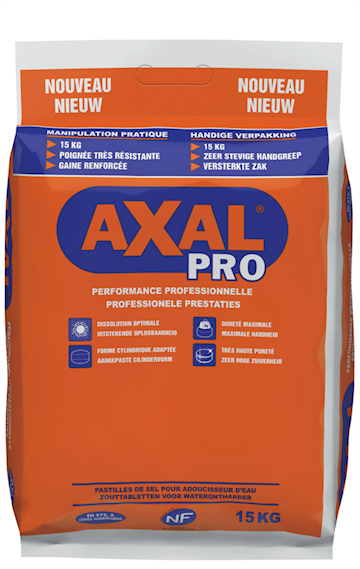
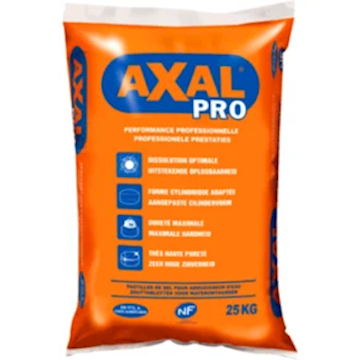
Axal (and Axal Pro) is a high-quality alternative from the same manufacturer as Regenit, also in tablet form. Available in 25 kg bags and as salt blocks.
Broxo
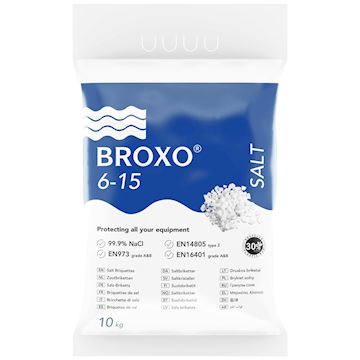
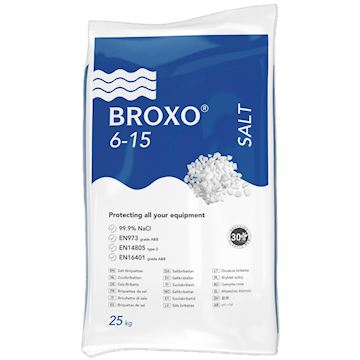
Broxo salt 6–15 is a granular salt (grain size 6–15 mm, also known as granulate) specially designed for water softeners that do not process tablets. Suitable for both private and professional installations.
How much water softener salt do I need?
Consumption depends on three factors: the hardness of your tap water, water usage in your home, and the capacity of your softener.
An average four-person household in an area with hard water (10–15 °dH) uses roughly:
- Approximately 25 to 50 kg of water softener salt per year
- That equates to one to two 25 kg bags
In areas with very hard water (> 15 °dH) or with intensive water use, this can rise to 75 kg or more per year. Always keep at least one spare bag in stock. Most water softeners only alert you when the salt level is low, at which point regeneration can quickly become a problem.
How do you refill your water softener?
- Open the salt tank (usually at the top of the softener).
- Check whether there is still water in the tank. This is normal — it is the brine.
- Refill the tank up to the maximum mark with water softener salt. No further, to prevent overflow during regeneration.
- Close the lid and let the softener do its work. The next regeneration happens automatically.
- Keep an eye on the salt level. Refill before the salt runs out completely, otherwise limescale can break through.
Frequently Asked Questions About Water Softener Salt
-
What is the difference between water softener salt and regular salt?

Water softener salt has a higher purity (99.8%+) than table salt or road salt and contains no anti-caking agents, iodine or other additives. Those substances would contaminate or damage the ion exchange resin in your water softener.
-
Can I use rock salt or coarse salt in my water softener?
No. Road salt and rock salt contain impurities (sand, mud, trace elements) that clog your resin and damage the installation. Only use salt that is explicitly sold as water softener salt, regeneration salt or water conditioner salt.
-
How much softening salt does a water softener use per year?
An average four-person household in a hard water area uses 25 to 50 kg per year. With very hard water or intensive use, this can rise to 75 kg or more.
-
Can I let my water softener run empty?
Preferably not. If the salt runs out completely, the softener can no longer regenerate and limescale will break through. Refill in time — for example, as soon as you have about a quarter of the tank remaining.
-
Where can I buy water softener salt?
At Nederlandse Zouthandel you order water softener salt directly online. Ordered before 15:00 on working days means dispatched the same day, with delivery throughout the Netherlands.